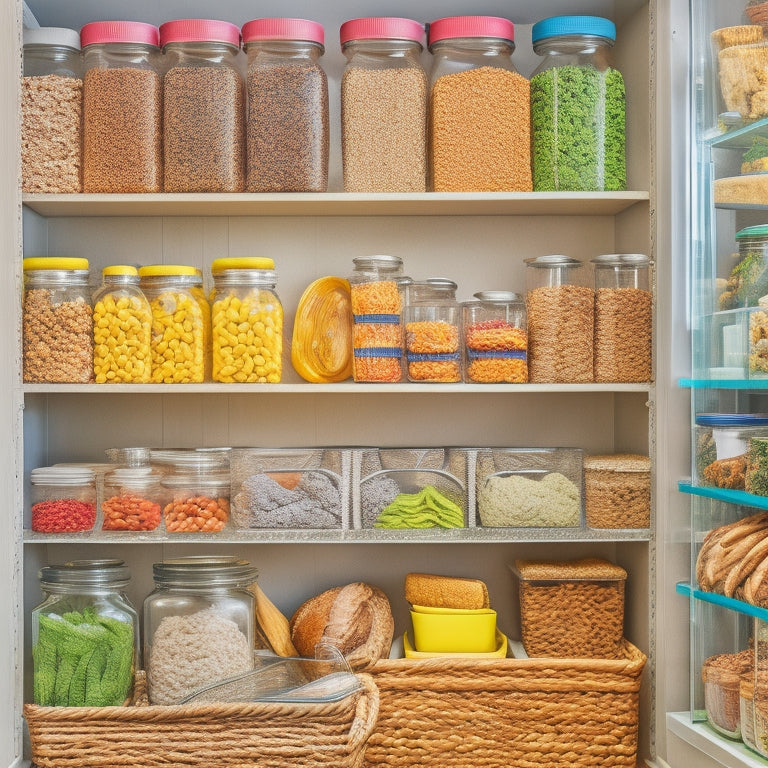
What's the Best Way to Store Special Diets?
You need a well-organized storage system that accommodates special diets to ensure secure and efficient meal prep, whether you're catering to gluten-free, vegan, or other dietary requirements. Start by labeling and categorizing ingredients, and designate specific zones in your pantry or fridge for each diet type. Consider color-coding or categorizing labels for different diets, and implement storage solutions like separate shelves or bins. You'll also want to store gluten-free and vegan options separately to prevent cross-contamination, and manage refrigerated and frozen items to uphold freshness. Now, discover the finer details of creating a seamless storage system that meets your unique needs.
Key Takeaways
• Label and categorize ingredients using color-coding or diet-specific labels for quick identification and allergen safety.
• Designate separate zones in the pantry and fridge for special diets to prevent cross-contamination and ingredient mix-ups.
• Store gluten-free and vegan options in separate, designated areas to prevent cross-contamination and ensure easy identification.
• Rotate refrigerated and frozen items regularly to prevent spoilage and waste, and maintain optimal temperatures for specific dietary needs.
• Maximize storage capacity by utilizing vertical and hidden spaces, such as shelves, hooks, and baskets, to free up pantry and cabinet space.
Labeling and Categorizing Ingredients
You'll need to develop a system for labeling and categorizing ingredients to guarantee that you can quickly identify which items in your pantry or fridge align with specific dietary needs. This is essential for allergen identification and accommodating guests with dietary restrictions. By doing so, you'll make sure that you can provide safe and suitable options for everyone.
To achieve ingredient transparency, consider using color-coding or categorizing labels to distinguish between different diets, such as gluten-free, vegan, or nut-free. This will allow you to swiftly identify which ingredients can be used in specific dishes.
Additionally, consider implementing storage solutions like separate shelves or bins for each diet type. This will prevent cross-contamination and make it easier to access the ingredients you need.
Designating Zones for Special Diets
By designating specific zones in your pantry or fridge for special diets, you can further guarantee that ingredients are stored safely and efficiently, making meal prep a whole lot easier. This approach to kitchen organization guarantees that you can quickly identify and access the ingredients you need for specific dietary needs.
For instance, you can allocate a section of your pantry for gluten-free products, another for vegan options, and so on. This segregation helps prevent cross-contamination and minimizes the risk of mistakenly using the wrong ingredient.
When designing your pantry layout, consider the food restrictions of those you're serving. Group similar products together, and store them in a way that makes sense for your cooking habits. For example, if you frequently cook for individuals with dairy allergies, store dairy-free alternatives in a convenient location.
Storing Gluten-Free and Vegan Options
When storing gluten-free and vegan options, it's essential to separate them from other products to prevent cross-contamination and ensure easy access.
You can achieve this by designating a specific area in your pantry for these items, using pantry organization systems like bins, baskets, or shelves. This will also help you to quickly identify what you have in stock, making meal prep more efficient.
Consider categorizing your gluten-free and vegan products into snack options, such as nuts, seeds, and dried fruits, and recipe ideas, like baking supplies and canned goods. This way, you can easily grab what you need when preparing a meal or snack.
Additionally, consider labeling your bins and baskets to guarantee that everyone in the household knows what's inside. By following these simple steps, you'll be able to provide safe and convenient access to gluten-free and vegan options for those who need them.
Managing Refrigerated and Frozen Items
Careful management of refrigerated and frozen items is vital to maintaining the integrity of special diets, as spoilage and contamination can have serious consequences. You'll want to make sure that you're rotating items regularly to prevent older products from getting pushed to the back and forgotten. This not only helps with minimizing waste but also guarantees that you're serving the freshest possible options to those with specific dietary needs.
Proper temperature maintenance is also important. Make sure your refrigerators and freezers are set at the correct temperatures, and consider investing in thermometers to monitor these temperatures regularly. This is especially important for items like meat, dairy, and prepared meals that require specific temperature ranges to stay safe for consumption.
Utilizing Vertical and Hidden Spaces
You can maximize your storage capacity by thinking beyond the floor and countertops, and instead, utilize vertical and hidden spaces to keep special diet staples organized and easily accessible. For instance, you can install shelves, hooks, or baskets on walls or the back of doors to store less frequently used items, such as special occasion foods or cooking gadgets. This will free up valuable space in your pantry and cabinets for everyday essentials.
When utilizing pantry space, consider using stackable containers or bins to store dry goods like gluten-free pasta, rice, or canned goods. Label each container so you can quickly identify what's inside.
Don't forget to organize your spices by grouping similar flavors together, such as baking spices or savory spices. You can use a spice rack or a magnetic board on the side of a cabinet to keep them within easy reach.
Maintaining Easy Accessibility and Visibility
Maintaining Easy Accessibility and Visibility
Frequently, maintaining easy accessibility and visibility of special diet staples is crucial to make sure that you can quickly find what you need, reducing meal prep time and stress. When you can easily see what you have, you're more likely to use it and avoid expired or spoiled ingredients.
Here's a breakdown of how you can maintain easy accessibility and visibility:
| Storage Solution | Benefits | Tips |
|---|---|---|
| Clear containers | Easy to identify contents | Label containers with ingredients and dates |
| Visible labels | Quickly find what you need | Use large, clear font and place labels at eye level |
| Easy access shelves | Reduce strain and effort | Place frequently used items at waist level or below |
| Organized shelves | Reduce clutter and confusion | Group similar items together and categorize by meal type |
Frequently Asked Questions
Can I Store Special Diet Ingredients in a Separate Pantry or Cupboard?
You can store special diet ingredients in a separate pantry or cupboard, which provides convenience and helps with pantry organization, while also preventing cross contamination and ensuring the safety of those with specific dietary needs.
How Do I Handle Cross-Contamination With Shared Kitchen Tools?
To minimize cross-contamination risks, you'll want to designate separate utensils for each special diet, ensuring they're washed and sanitized regularly to prevent the spread of allergens and avoid compromising the integrity of each diet.
Are There Specific Storage Containers for Special Diets I Should Use?
You'll want to use dedicated storage containers for special diets, ensuring organization and accessibility. Look for containers with clear labeling options to easily identify contents, and consider color-coding for different diets or allergens.
Can I Store Special Diet Foods in a Dedicated Area for Convenience?
You can store special diet foods in a dedicated area for convenience, using separate storage to keep them organized and easily accessible, making meal prep and serving a breeze.
How Often Should I Clean and Sanitize Special Diet Storage Areas?
"Break out your medieval germ-slaying sword, because it's time to conquer special diet storage areas! Clean and sanitize them daily, ensuring storage organization prevents cross contamination and keeping those areas squeaky clean is your top priority."
Related Posts
-
Innovative Lazy Susan Storage Solutions
Innovative Lazy Susan storage solutions are a revolutionary advancement for any space, especially in kitchens. They m...
-
Smart Kitchen Countertop Storage Innovations
Smart kitchen countertop storage innovations are transformative for maximizing your kitchen's potential. You can clea...
-
Best Vertical Storage Solutions for Small Kitchens
In a small kitchen, vertical storage solutions are your secret weapon to maximize every inch of space and keep your c...
